
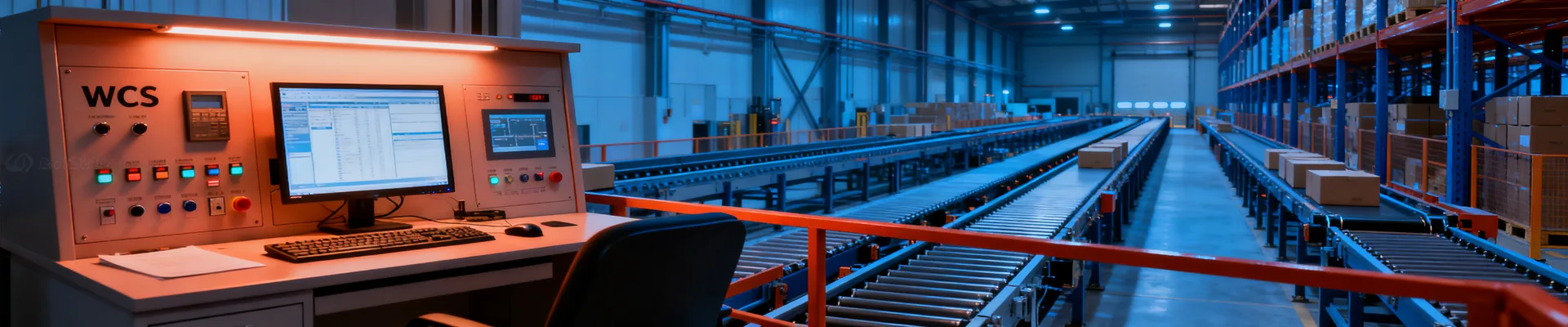
When you're evaluating WCS manufacturers, the lowest quote is almost never the lowest total cost. That's not a sales pitch—it's what I've learned after handling 45+ rush warehouse automation projects, including several where a 'bargain' WCS turned into a six-figure headache. Total cost of ownership (TCO) includes integration effort, downtime risk, support responsiveness, and upgrade paths. Ignore those, and you'll pay for it later.
I'm a project manager at FORTNA, and my job is to fix problems when deadlines are tight. In March 2024, a client called us 72 hours before their peak season launch. They'd chosen a private-label WCS to save $40,000 on the software license. But the system couldn't handle their conveyor sortation logic, and the vendor's support team took 48 hours to respond. We ended up writing custom middleware overnight to bridge the gap. The client paid us $15,000 in emergency fees—but they avoided a $200,000 penalty from missed shipments. That's when I stopped arguing with procurement about sticker price and started preaching TCO.
Here's the thing: WCS is not a commodity. It's the nervous system of your warehouse. Evaluating manufacturers means looking beyond the feature list. Three things matter most: integration depth, support responsiveness, and upgrade path. In that order. Let me explain.
Integration Depth: The Hidden Engineering Hours
Any WCS can claim 'WMS integration.' But the real question is how much engineering time it takes to make that integration work. A private-label WCS might have a connector for SAP, but if your WMS is a custom legacy system, you'll need custom code. That's where the costs hide. When I compared a project using a tier-one WCS (like FORTNA WES) to one using a private-label system, the difference wasn't just license fees. It was the 40 hours of extra integration work we spent patching data mismatches. At $200 per hour, that's $8,000 right there—and that's before downtime risk.
Never expected the cheaper WCS to cost 30% more in year two. Turns out the support fees and downtime added up. The vendor charged for every minor patch, and their uptime SLA was 95%—meaning 18 hours of potential downtime per month. For a warehouse running 24/7, that's a non-starter.
Support Responsiveness: When Minutes Matter
Rush fees are usually worth it for critical projects. But with WCS, you're paying for support before you need it. Ask potential suppliers: What's your response time for a P1 issue? Is it 24/7 or business hours? Do you have engineers on call? A private-label supplier might outsource support to a third party—and that third party might not know your system. I've tested six different WCS support models; the ones that cost less upfront almost always have slower response times. To be fair, if your warehouse runs one shift and you can tolerate a few hours of downtime, a cheaper support plan might be okay. But for high-throughput operations, support is the difference between a minor blip and a major crisis.
Upgrade Path: Don't Lock Yourself In
WCS software evolves. If your supplier doesn't have a clear upgrade path, you'll be stuck on an old version. That means security vulnerabilities, missing features, and eventually a forced migration. I've seen clients spend $50,000 to rip and replace a WCS because the original vendor stopped developing it. That's a TCO disaster. Look for manufacturers who commit to regular releases and backward compatibility. FORTNA's WES, for example, releases major updates twice a year—and we publish a roadmap so you can plan. (Should mention: we also offer a conveyor-agnostic approach, so you're not locked into proprietary hardware.)
That said, upgrade paths are more critical for complex facilities. For a simple 10,000 sq ft warehouse, a basic private-label WCS might serve you fine for five years. But if you plan to scale, think twice.
The TCO Checklist
When you're comparing WCS manufacturers, don't just compare license fees. Build a spreadsheet that includes:
- Integration cost: Hours of internal engineering and third-party consultants.
- Support cost: Annual fees plus the cost of downtime (calculate your revenue per hour).
- Upgrade cost: Expected frequency and effort.
- Risk cost: Penalties for missed SLAs, expedited shipping for replacement parts, etc.
The vendor with the lowest license fee often has the highest integration and support costs. I now calculate TCO before comparing any vendor quotes.
Look, I'm not saying budget options are always bad. I'm saying they're riskier. And in a warehouse, risk has a price tag. If you're evaluating WCS manufacturers for a high-throughput facility, start with TCO. Your CFO will thank you later.
Boundary Conditions
This approach doesn't apply to every situation. If you're running a small, manual warehouse with no conveyor automation and you just need basic task management, a lower-cost WCS might be a perfect fit. The complexity of TCO analysis may not be worth the effort for a $5,000 software purchase. Similarly, if you have a massive in-house IT team that can build custom integrations, you might be able to mitigate some of those hidden costs. But for most mid-to-large operations, the TCO mindset is essential.
And one more thing: don't fall for the 'private label' trap. A warehouse execution system private label can be tempting because it's cheaper. But you're often getting a white-labeled version of a generic product with limited support and no influence over the roadmap. If the supplier goes out of business, you're stuck. I've seen that happen twice. Now I always ask: who actually develops the software, and what's their track record?
At FORTNA, we're not the cheapest WCS supplier. But we focus on TCO because we've seen what happens when you don't. And if you need a conveyor system to go with that WCS, our material handling team can help you avoid the integration nightmares altogether. That's not a sales pitch—it's just what the data says.

I’m Jane Smith, a senior content writer with over 15 years of experience in the packaging and printing industry. I specialize in writing about the latest trends, technologies, and best practices in packaging design, sustainability, and printing techniques. My goal is to help businesses understand complex printing processes and design solutions that enhance both product packaging and brand visibility.