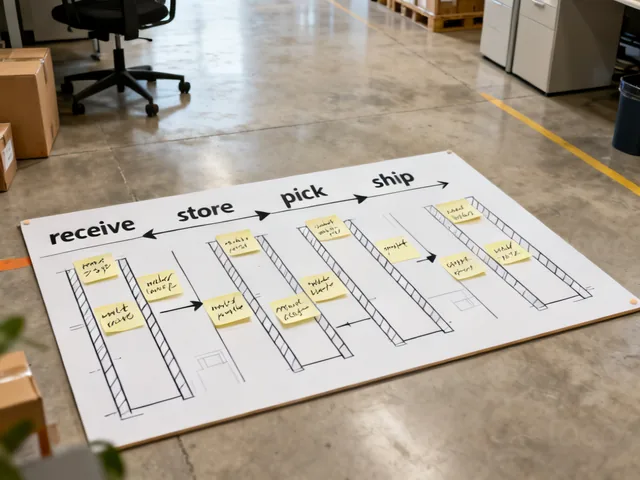
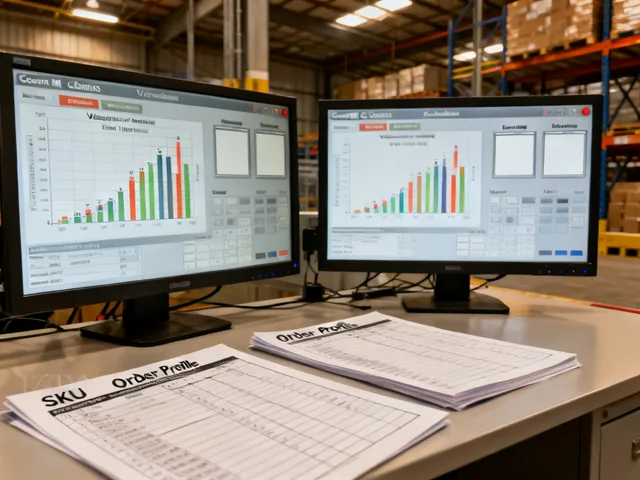
Phased warehouse automation roadmap workshop with flow study boards
Automation Roadmap

FORTNA Automation Roadmap — from flow study and SKU data to commissioning

A phased guide that keeps load units, SKU profiles, routes, interfaces, safety evidence and acceptance gates in one sequence. Use it when capital decisions need a clearer path than a single go-live weekend.

Why FORTNA sequences automation before celebrating platforms

Teams often jump from a technology shortlist to a cutover date. The FORTNA Automation Roadmap inserts the evidence steps that prevent that leap: a flow study that names receiving through shipping constraints, a SKU and order profile that binds throughput language, an interface matrix that assigns WMS/WCS/WES/PLC ownership, and commissioning windows that protect live fulfillment.

“A roadmap is useful only when every phase leaves a file the next shift can open.”

Each phase ends with a measurable gate—inputs captured, assumptions labeled, tests defined or fallbacks rehearsed. Progress is not a percentage of “digital transformation”; it is the presence of load data, peak windows, divert confirmation rules and recovery procedures. Certificate logos appear only when issuer and scope exist; planning-range figures are never presented as certified public facts.


Phase checklist: expand the step you are on

Start where your evidence is weakest. Skipping a phase is allowed only when the missing gate is explicitly deferred with an owner and date.

Map receive, store, move, pick, sort and ship with aisle geometry, dock capacity, fire zones and brownfield keep-alive requirements. Capture floor quality, power and maintenance access that will later constrain equipment and control placement.

Document active SKU depth, velocity classes, lines per order, multi-line share and load-unit dimensions. Throughput targets must reference the peak window length, accumulation limits and replenishment cadence that feed the pick and sort stages.

Assign command, confirmation, timeout, alarm and recovery ownership across WMS, WCS, WES, PLC and fleet management. OPC UA or proprietary handshakes are listed with retry behavior so shared routes do not invent procedures under peak pressure.

Define factory and site acceptance cases with representative loads, divert confirmation, recirculation and exception recovery. Safety-related control behavior is tested against the agreed matrix, not assumed from a brochure claim.

Cut over by zone or flow stage with fallback states, diagnostic access and critical-spares readiness. Operational handover includes recovery procedures operators can execute when a subsystem cannot confirm during an outbound wave.

Architecture trade-offs the roadmap forces into the open

Phase gates exist so teams confront real disputes—centralized orchestration versus modular controls, peak rate versus resilience—before FAT cases are written.

Storage density vs direct access

Maximum density can reduce footprint when inventory profiles fit shuttles or deep-lane AS/RS, but it increases sequencing and recovery dependencies. Direct selectivity improves maintenance isolation and SKU flexibility. The roadmap requires selectivity, fire-access and expansion notes before a dense storage control concept is approved.

How FORTNA validates a phase gate

A gate passes when load units, peak window length, interface cycle-time targets and fallback states are written with owners. System throughput is stated as design and peak rates with the order profile; system availability is discussed at subsystem and end-to-end levels. ISO 13849-1 or ISO 12100 references appear only when the configuration under review has documented scope—not as decorative logos.

Request a roadmap session

Walk FORTNA through the phase you need to unlock next

Share the flow data you already have—or the gaps you want structured. The roadmap session produces a sequenced checklist, not a slogan.

Please provide your name.
Please provide a valid email.
Please provide your company.
Please describe the application.
Consent is required to submit.